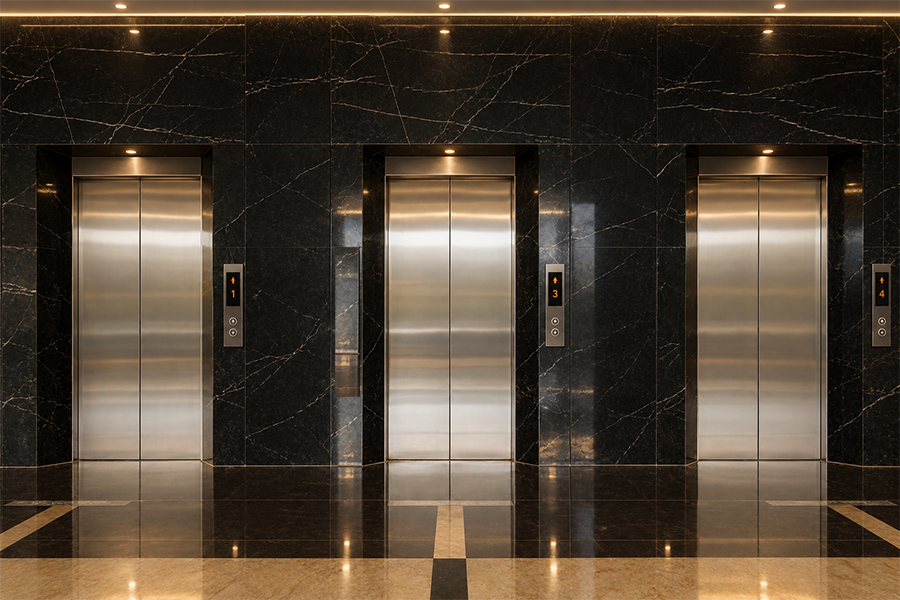
The best lift is the one nobody notices. Here’s what that looks like, and the small signs it’s starting to fade.
Nobody has ever thanked a lift.
You step in, press a number, and a few seconds later the doors open on the right floor. You walk out and get on with your day. The lift did exactly what it was supposed to do, and you didn’t think about it once.
In a busy building, that happens thousands of times a day. In New York City alone, The New Yorker once reported about 30 million lift trips every day. Almost none of them are remembered. The only trip anyone talks about is the one that goes wrong.
That’s the deal a lift makes with a building. When it works, it disappears. When it fails, everyone knows.
It’s built to be forgotten
Lifts are designed with far more backup than they need. They typically have several times as many cables as it takes to hold the car, plus automatic braking near the top and bottom of the shaft, backed up by electromagnetic brakes. That’s a big reason lifts are so safe, and why most people never worry about them.
But backup isn’t the same as upkeep
All those safety features are only part of the picture. A lift still needs looking after, and poorly maintained lifts are more likely to malfunction and break down.
What “fine” looks like, and what changes
When a lift is fine, you don’t hear about it. The doors open and close smoothly, the car stops level with the floor, and nobody says anything.
When something starts to change, it’s usually small. A door that hesitates, or closes sooner than it should. A car that stops slightly above or below the floor. Staff or residents starting to say, “That lift is doing something odd.”
None of this means something terrible is about to happen. But it does mean something is changing, and the level stop matters more than you’d think: one safety group estimates that around 75% of lift injuries come from people tripping as they get in or out of a car that didn’t stop level with the floor.
If you own or manage the building
You can’t see most of what a lift does, so these small signs are your early warning. The aim isn’t a lift people admire. It’s one they forget about.
A lift nobody notices starts with how it’s installed. Planning a new one? Talk to us before the plans are final.