Picture a shop with one cashier. Most days it’s fine. Then the cashier steps out, and the whole queue stops. Nothing is broken, but nothing moves.
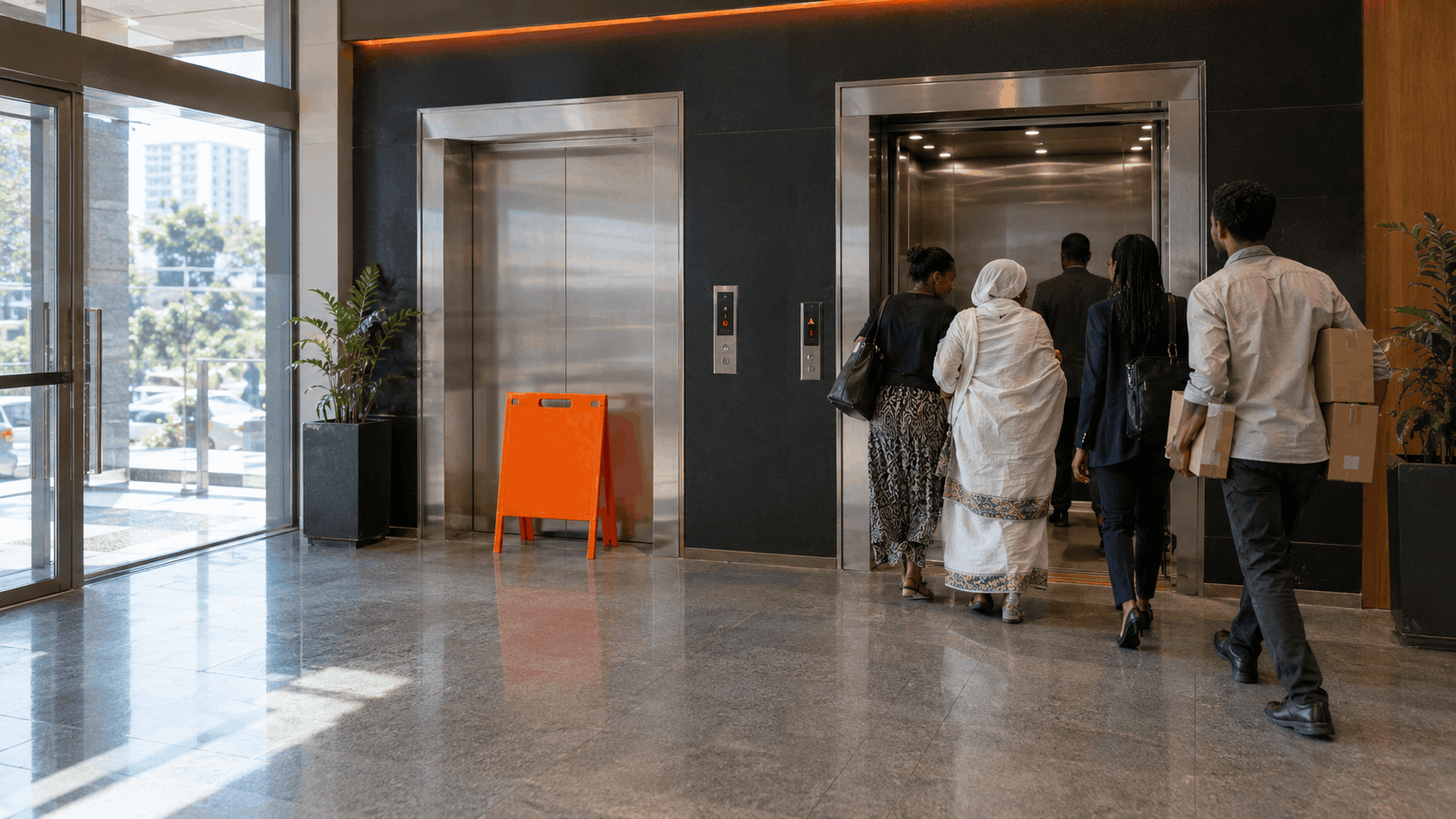
A building with one lift works the same way. When it runs, nobody thinks about it. When it stops, the building feels it right away.
What a stopped lift really costs
When the lift stops, the stairs are all that’s left, and for many people in a building, stairs aren’t an option.
An elderly visitor can’t reach the clinic on the fourth floor. A tenant can’t carry a week of shopping up to the seventh. Deliveries stop. A business on an upper floor loses customers who simply don’t climb. The lift didn’t just stop, the building stopped doing its job.
The question to ask
If the lift is out for a full day, can the building still do its job?
If the answer is no, a second lift deserves serious thought. This is usually the case for tall buildings, busy offices, hotels, clinics, and apartment blocks with many floors. With two lifts, one can be repaired while the other keeps running. Nobody has to choose between maintenance and a normal day.
The cheapest time to decide
If you’re still planning the building, this is the moment. A second shaft in the drawings is a small decision. Added later, it usually means cutting into a finished building. Developers who ask the lift question before the floor plan is final have far more options than those who ask after.
The takeaway
Lifts stop sometimes. That isn’t the problem. The problem is when the building has nothing else to fall back on. In a building that can’t afford to stop, two lifts is the plan.
Planning a new building? Talk to us before the floor plan is final. We’ll help you work out how many lifts it needs.
📞 +251-953-577-777 | +251-953-677-777