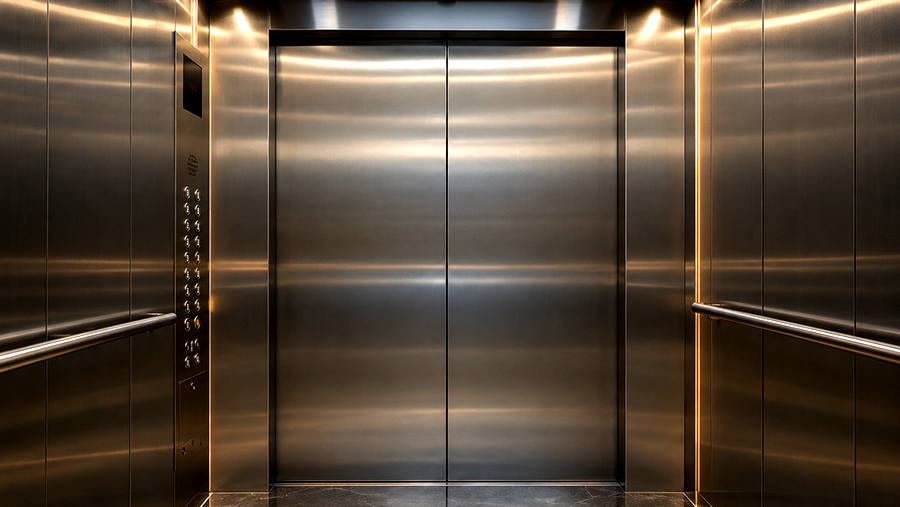
Every day, people enter and exit elevators without giving the doors much thought. They open, passengers step inside, they close, and the elevator moves.
But elevator doors do much more than provide access. They are an important part of the elevator's safety system, and their design and operation affect how people interact with the elevator every day.
## 1. Separating the elevator car from the shaft
One of the elevator door system's most important functions is to help prevent people from accessing the elevator shaft when the car is not safely present at their floor.
Elevator systems typically have two sets of doors: **car doors**, which travel with the elevator, and **landing doors**, which are installed at each floor.
These doors are designed to work together. The landing doors should only be opened when the elevator car is correctly positioned at that floor and the system's interlocking conditions are satisfied.
This separation is essential because an elevator shaft is not an ordinary passageway. Access must be controlled.
## 2. Helping prevent unsafe movement
Elevator doors are integrated with electrical safety circuits and interlocks. These systems help ensure that the elevator does not travel under normal operation when the required door-closed and locked conditions have not been met.
If a landing door is not properly locked, the elevator's safety system should prevent it from operating.
This is why door interlocks are more than simple mechanical parts. They are part of the system that helps control when an elevator can move.
## 3. Detecting people and objects in the doorway
Modern elevator doors commonly use infrared light curtains or similar detection devices to identify people or objects in the doorway while the doors are closing.
When the detection system is triggered, the doors are generally designed to stop closing and reopen.
This helps reduce the risk of someone being struck or trapped by closing doors. However, detection systems have limits, and passengers should never deliberately block, force, or interfere with elevator doors.
## 4. Managing repeated daily use
Elevator doors may open and close hundreds or even thousands of times, depending on the building and its traffic.
That repeated operation puts demands on door rollers, tracks, operators, sensors, and other mechanical and electrical components.
Wear, poor adjustment, contamination, or faulty components can contribute to slow operation, unusual noises, repeated reopening, or doors that fail to close correctly.
Regular inspection and maintenance help identify these issues before they develop into larger operational problems.
## 5. Why door performance matters to the whole building
When elevator doors work reliably, passengers can move through a building with fewer interruptions. When they malfunction, even a functioning elevator may become unavailable.
In busy offices, commercial buildings, hotels, and residential developments, recurring door problems can affect traffic flow, passenger experience, and elevator availability.
Door performance is therefore not just a matter of convenience. It is also part of maintaining a dependable elevator service.
## The bigger picture
An elevator is a coordinated system, and its doors are an essential part of that system. Their job involves controlled access, safety interlocking, obstruction detection, and reliable repeated operation.
At Shobole, we believe that understanding the components behind everyday building systems helps people appreciate the engineering that supports their safe and dependable use.
**Planning an elevator installation or looking for support with an existing system?** Contact Shobole to discuss your project requirements.
### Frequently asked questions
**What is the difference between elevator car doors and landing doors?**
Car doors are attached to the elevator itself and move with it. Landing doors are installed at each floor and provide access to the elevator car when it is correctly positioned there.
**Why does an elevator refuse to move when its doors are open?**
The elevator's safety circuits and door interlocks are designed to prevent normal travel unless the required door-closed and locked conditions are satisfied.
Possible causes include obstruction detection, misalignment, worn components, sensor issues, or problems with the door operator. A qualified technician should inspect recurring faults.
**Do elevator doors require maintenance?**
Yes. Door mechanisms, interlocks, sensors, and related components should be inspected and maintained according to the manufacturer's instructions and applicable safety requirements.